The U.S. Path to Collapse


NIA
The Financial Crisis Inquiry Commission today held hearings with former Lehman Brothers Chairman Dick Fuld. They are trying to figure out why Lehman Brothers was allowed to collapse, with the belief that the failure of Lehman Brothers caused the financial crisis of 2008. The truth is, the failure of Lehman Brothers was a result of the crisis and allowing them to fail was the only correct decision the government made during the crisis.

The pain that was felt after the collapse of Lehman Brothers is nothing compared to the pain that will come when we begin to feel the effects of bailing out the rest of Wall Street. U.S. second quarter GDP growth was revised down on Friday from 2.4% to 1.6%. In order to get this 1.6% GDP growth, the U.S. government had to spend $3.7 trillion on bailouts, stimulus bills, the buying of mortgage backed securities, and other commitments.

General Motors reported today that their August deliveries fell 25% from one year ago to 185,176 vehicles. The U.S. government used "cash for clunkers" to buy GDP growth in 2009, but that growth stole from future automobile sales. NIA believes that GM's sales decline is a sign that the U.S. will likely see a sharp contraction in GDP beginning in the third-quarter, which will lead to the Federal Reserve implementing the mother of all quantitative easing and cause a massive sell off in the U.S. dollar.

Christina Romer, outgoing Chairwoman of Obama's Council of Economic Advisers, today called for more government spending and less taxes as a way to bring down unemployment. The combination of more government spending and less taxes equals massive inflation, but this represents the state of mind in Washington today. Inflation is still the last thing on their minds because they don't see it yet.

Even though we might not see massive across the board price inflation at this time, gold and silver prices have been surging ever since NIA released its article "Gold and Silver Capitulation is Near" on July 28th. Gold is very close to breaking its all time nominal high of $1,264.90 per ounce set during June and silver is getting ready to test the critical $20-$21 per ounce resistance level.

Rising gold and silver prices indicate that the U.S. is headed for an explosion in budget deficits that will rise far beyond what it can pay for through borrowing. Leading Chinese economists are now calling Japanese debt less risky than U.S. debt and with the Japanese savings rate in decline, the U.S. will soon have nobody left to borrow from. The only option will be monetization and already the Federal Reserve is getting ready to buy $10 billion to $30 billion per month in U.S. treasuries to keep its balance sheet at inflated levels.

There are now 50 million Americans on Medicaid, with annual Medicaid costs rising 36% over the past two years to $273 billion. The recently enacted health care bill will add 16 million more Americans to Medicaid beginning in 2014, but the U.S. government will likely go bust by then. It is impossible to have an economic recovery when jobless benefits are encouraging Americans to stay unemployed. U.S. unemployment insurance spending has nearly quadrupled since 2007 to $160 billion annually. Even food stamp costs have surged 80% over the past two years to $70 billion annually.

Once Americans get used to receiving and relying on government entitlement programs, it is hard to wean them off of them. NIA has been hearing reports from members with friends who say they will only "come out of retirement" if they can find a job that pays $25 per hour or more, because with anything less it wouldn't be worth losing their jobless and food stamp benefits. Americans expect to receive their jobless benefits forever and we are sure Obama will continue to extend them leading up to the 2012 election.

There are now countless warning signs all around us on a daily basis that the U.S. is headed for a complete societal collapse. NIA received an overwhelming response from its members when we asked you to submit any signs you see that a societal collapse is near. The response we received was so strong that we are now beginning to produce a documentary about America's upcoming collapse of society. The documentary will be over an hour long and we are hoping to release it by the end of October. It will go beyond the economic facts and statistics that were discussed in 'Meltup' and help expose the upcoming collapse from a real life perspective. NIA believes this documentary will appeal to a very mainstream audience and help open up the world's eyes to the truth about the path this country is on.

Please continue to spread the word about NIA by telling your friends and family to subscribe for free.
inflation.us

Global Trade


Monty Guild and Tony Danaher
The Rise of Smaller Emerging Nations as Trading Partners
Recent research by UBS economist Jon Anderson illustrates how trade is being reshaped in the developing world.  It will probably not surprise you to learn that between 1998 and 2008 six developing nations recorded an increase in exports (as measured by manufacturing & GDP) of more than 25 percent.  What will surprise you are the names of these countries.
The emerging market countries that grew their exports by the largest percentage were not the big countries one might expect, such as China, Brazil or India.  Instead, they were smaller countries, with less celebrated economies.  They were Cambodia, Thailand and Vietnam in South East Asia and the Czech Republic, the Slovak Republic and Hungary in Eastern Europe.
Why did these countries record the highest increase in exports?
Consult a world map and the answer becomes clear.  To quote Dr. Anderson:
"... all of these countries sit in exactly two small locations in the world directly east of traditional developed Europe [the Czech Republic, the Slovak Republic and Hungary], or just around the shipping lanes from the original Asian Tigers [Hong Kong, Korea, Singapore and Taiwan]." As we can see, "...the largest beneficiaries of the great secular expansion in global trade were those situated next to it, either in terms of outright proximity to markets or proximity to the sea- based production chain."
Trade Routes are Changing
In our opinion, it is significant that emerging nations are becoming less and less dependent upon the developed world for import and export trade.  According to estimates produced by the world trade organization, trade between emerging markets increased by 18 percent per annum from 2000- 2008.  This was a much larger increase than the trade between developed and emerging nations or the trade between developed nations.
Why?
1.)  For many years developing nations have been forming new trade relationships with each other.
It is clearly no accident that President Lula of Brazil has visited over 60 developing nations during his tenure and is working hard to develop trade with many nations.  This policy of extending Brazil's economic influence throughout the developing world is similar, albeit on a smaller scale, to China's huge efforts in this area.  India is also working to develop and enhance its trade contacts among developing nations, as are smaller countries all over South America, Southeast Asia, and Eastern Europe.
2.)  Many developing countries have begun acquiring assets in other less developed nations to fill their need for raw materials.
Companies from China, India, Brazil and others are acquiring properties: mines, oil fields, production facilities, farms and other assets in a large number of countries.  These companies may be acting for their own benefit or as part of a national policy to secure raw materials and other elements of production.  Not only does it make the purchasing country more secure by guaranteeing that certain materials available for key growth industries, it also provides them with a potential economic advantage over competitors because they can source their materials at lower price or in greater quantities.
China's Rare Earth Industry
Recently a wave of fear has been caused by China's announcement that they would implement export controls on some of their rare earths.
This announcement has caused the world to awaken to an issue that we have been commenting on for years.
Rare earths are necessary to make many high tech instruments and products that we rely on in our modern technological society for consumer, industrial and military goods. A lack of availability of some rare earths will create economic and militarily difficulty for many nations until alternative sources of these rare earths are developed elsewhere.  It is likely that the alternative sources of these materials will be found and/or produced, however, a long time lag before sufficient production of these raw materials could damage the competitive position of those who do not have access to the required supplies.
The Age of U.S. Dominance Draws to a Close
It is not an accident that English has been the language of commerce, diplomacy, and military activity for the past several decades. The U.S. dollar is the world's reserve currency and has also been used as the national currency by many nations around the globe.
The U.S. dollar's position as the world's reserve currency has been based on the U.S.'s leadership status on the world stage, not just on economic issues, but on political, martial and social issues as well.
In short the U.S. sends foreign aid and other programs to allies and potential allies, and even fights wars to strengthen the political and economic positions the U.S. and our allies.  Very few would argue that U.S. companies and industries are not among the beneficiaries of these efforts.
Today, as emerging economies rise in global economic prominence and an increased proportion of global trade is being conducted between developing nations, the U.S. is losing its central role in world trade.
This Trend Will Eventually Impact the U.S. Dollar's Position as the World Reserve Currency
As the U.S. loses economic power, American citizens and most especially American investors should be prepared to have the U.S. excluded or at least not included in many multilateral trade, economic and political talks.  This will decrease the clout and the economic benefit for many large U.S. companies and industries.
Stock Valuations
Asian stocks in fast growing nations have begun to sell at prices equal to or at a premium to U.S. and European stocks. Why is this happening?
Asia has:
1.)  3 billion new consumers
2.)  Robust trade between Asian economies and other developing markets.
3.)  Strong banking systems, not the highly leveraged banking systems that we find in much of Europe and in the U.S.
4.)  Reasonable expectations of growth for companies and economies as a whole.
5.)  Populations with strong entrepreneurial spirit and the desire to rise up the economic ladder.
We have often discussed the problems facing the developed nations, so I will not go into detail again here.  Suffice it to say, that while Asia enjoys much of #s 1-5 the developed world is busy dealing with:
1.)  A badly damaged banking system.
2.)  Overwhelming debt (This debit is so high that if inflation develops, and we believe that inflation is inevitable, interest costs can overcome growth every rapidly.).
3.)  Low economic growth.
The emerging economies of Asia have 5 positives on their side and the developed world has 3 negatives.  If you are a global investment analyst, it's not hard to choose where to invest.
If the Obama administration wants to gain favor with investors, may we suggest that they consider extending tax cuts and implement other programs to spur capital formation and new job creation in the U.S.   If the administration were to undertake such a program the U.S. economy and U.S. stock market would immediately benefit.
Mexico and U.S. Immigration
Many Americans are aware of a serious problem, which has been growing in Mexico for some time.  Mexico's police, economic and political systems are collapsing.  Most serious is the fact that a large percentage of all of the police forces in Mexico may have been compromised or moved into the employ of drug traffickers.  The causes of this problem have been a long time in the making.  For generations police and political corruption has been an open secret in Mexico.  The effect of chronic corruption combined with the lack of growth of a middle class, the high profits in the drug business and a volatile social environment Mexico has been brought to a tipping point.
To those who live in the Southwest of the U.S. and share a state border with Mexico this has become more obvious in just the past 6 months.  In our opinion, many more Mexicans will vote with their feet and leave Mexico for the U.S. if they can figure out how to get here.
We expect the U.S. to end up spending a large amount of money fighting narco terrorism in Mexico and, eventually, on U.S. soil.
Summary
During the past few weeks; gold, silver, wheat, corn and some other metals have been accumulated by investors.  We believe that the current news background will continue to support higher prices for precious metals, grains, oil, and fast growing stocks in countries with high growth rates.
We believe that political instability in Mexico, Pakistan, Afghanistan and elsewhere will keep investors focused or risk rather that reward.
In such an environment it is our experience that one is wise to hold gold, oil, high yielding stocks and food commodities and to keep a large percentage of cash available to spend should opportunities arise.
If the Obama administration were to continue the tax rates currently in effect rather than raise them, and if they were to implement programs to stimulate capital formation and new business development and thus job creation in the U.S., the U.S. economy the stock market and the election prospects of Democrats would all be benefited.  It would be a change in their approach of tax and spend but perhaps they have been listening to the electorate.
We continue to warn all readers against long-term bonds of any issuer.
We see inflation developing in India, China, and elsewhere and believe that within a few quarters this inflation could be imported into the developed world.  In such an environment holding long duration bonds could lead to huge losses.
For those of you who hold Municipal Bonds, we will be happy to analyze the stability of the issuers of your bonds free of charge.  Contact our office at (310) 826-8600 if you would like to accept this free offer.
Thank you for listening.
Monty Guild and Tony Danaher
Guild Investment Management Inc.'s mission since its founding in 1971 has been to provide our clients with consistently high returns while minimizing our risk profile over both intermediate and long term periods.
Guild's philosophy is to seek value, and invest with a global view. Guild believes that having this perspective is essential to understanding the macroeconomic trends, changes and relationships that create investment opportunities. Our global approach to selecting investments not only helps Guild discover new investment opportunities, it is essential to understanding and anticipating risks in increasingly interconnected, changing economies.
Thorough research and a disciplined analysis of returns and risks increase long-term success. In our portfolio management, we weigh the relevant pieces of information, estimate the risks of the unexpected, anticipate change, and then make judgments based on the odds, with the knowledge that success is never guaranteed. Uncertainty is an unavoidable part of investing and it is naïve to believe that it can be eliminated. Occasionally, good investment ideas have poor results.
Recognizing that uncertainty exists increases long-term investment success in changing market environments. Having the flexibility to concentrate when opportunities are present, and to reduce exposure when risks dictate caution, has been a key to our success.

The Reckless Mess Created by The Fed


Bob Chapman
Almost two years ago the US Treasury was selling large amounts of short-term Treasury bills to fund bailouts and stimulus. That caused a major increase in debt. Most of that paper was 2-year bills and it is coming due for rollover shortly. While that transpires, October will report the annual fiscal deficit of 9/30/10 of about $1.5 trillion, a figure thought impossible just 1-1/2 to 2 years ago.
This time around the Treasury will have to depend on the Fed and US banks and institutions to fund this mountain of paper. China has reduced its holdings of Treasury debt by about 6%, or by about $6 billion over ten months, or by about 10% or almost $100 billion over the past year or so. We know these figures are estimates because the Chinese government has the same trouble the US government has, it cannot discern truth from fiction.
Now that the effect of the first quantitative easing is behind us the economy is facing a hangover even with zero interest rates and a 2.42% ten-year T-note. It was just months ago that those rates were close to 4%. The sale of Treasuries for the past six months was easy with a strong US dollar caused by a manufactured crisis in Greece and in the euro. As we look back we can see almost the whole picture. We saw major NYC banks going very long the dollar and short the euro beginning in late October of last year. At the time we couldn’t figure out what they were up too, but it became apparent this past March. The contrived attack on Greece and the euro was to allow the Treasury to fund its debt and to make the banks, which own the Fed, a fortune. 100 to 1 leverage is a lock when you have inside information and are creating the crisis.
Except for Greece, Euro Zone members numbers welcomed the 17% fall in the euro vs. the dollar, because their exports were cheaper and more price competitive. What is there not to like about that? As a result the bond vigilantes went into hiding, because they were afraid to go head to head with the Treasury and the Fed. This wasn’t the old days when these entities did not rig the markets. This was today, when they rig every market 24/7, under the Executive Order that created "The President’s Working Group on Financial Markets." This is a page out of the national Socialist handbook of Germany in the 1930s. Government and markets by regulation known as corporatist fascism aided by collectivist Keynesian economics. The result has been 17 months of net financial inflows, part of which was aided by the Fed in their secret offshore operations. It is no wonder they do not want to be audited and investigated. Now we are back to square one again. We announced two months ago that QE2 was on the way, but as usual few were listening. Monetization is the name of the game.
Quantitative easing will put the American public at ease, at least temporarily. They do not realize it but the American and world economies are in a deliberate state of slow collapse. Yes, the Fed has created a terrible mess. They have been totally unprofessional and reckless. The result has been, even after five quarters, averaging 3-1/4% growth, sales of new and used homes are dismal with no hope in sight for improvement, unemployment just under its highs, record debt, slight wage increases, lost purchasing power due to inflation and few prospects for improvement. Inventory is all in place, so that can no longer be a plus.
What the Fed has been approaching since June is a "liquidity trap." That is when loans are offered to business and they refuse to borrow. They stop using credit because they question the future of the economy, their government and the specter of new taxes in the future. Money and credit is available, but few want to assume the risks to borrow.
Between stimulus and federal government hiring there has been nothing sustainable about the economy. It’s on federal life support with assistance from the Fed.
This market is the exact opposite of the gold and silver markets, which are in an 11-year bull market. The metals separated from the dollar 15 months ago and they have already won the battle of the world’s only real currency. Gold has gained 15% a year for those last 7 years. This is a secular bull market and cannot be denied. Further, gold has appreciated annually against every currency.
One of the things we find extremely interesting is that many well-meaning, bright professionals do not really understand what this is all about. They do not know the ulterior motives of those in power behind the scenes. They do not know who really pulls the strings politically, in government, at the Fed, and even on Wall Street and in banking and insurance. They do not understand the hidden agendas of enrichment and power. They do not know the real goals of legislation for Cap & Trade and Carbon Taxes when it has been proven, without a doubt, that global warming is a fraud. If they knew of the Council on Foreign Relations, the Trilateral Commission, or the Bilderberg Group, and these men and women express their ideas and nothing more at their meetings and in their committees, but that is not the way it works. These people and groups set policy for government and the shape the future of our country and the world. We have been reading their publications for more than 50 years, so we feel qualified to express our opinion. Just look at one of their recent failures, the North American Union. This was an attempt to merge Canada, the US and Mexico into one country. It’s a matter of record, their records, that the planning for this project began in the early 1990s in conjunction with the sister organization, the Royal Institute of London. They laid all the plans out to set up the NAU to eventually merge it into a world government. They admit this, but the brightest on Wall Street, in banking, etc., don’t get it.
They don’t understand, or want to understand the control these people have and how they shape the world’s future. What difference does it make if they really do not understand the problem. Who really pulls the strings and how the game works. Is Obama better than Bush, or Bloomberg, etc.? No, because they all take their order from different factions of the same group of people. We understand what these people are up too and that is how we are able to back into what they are trying to accomplish. That is why we are right so often. We understand who they are and what their game is. We know why intelligent people and newsletter writers are wrong so often. They do not understand who is really in charge and who pulls the strings and what their final goals are.
As an example, we witnessed an annual meeting put on by these people at Jackson Hole, Wyo. It is a showcase to present a path, which is to be followed for the next two years. They didn’t tell you that. They presented it as a showcase of ideas. The meeting was far from that. All the players had their marching orders. The results were preordained. We wrote about what would happen and why before it ever happened, just as we forecast two month ago that those behind the scenes had decided that quantitative easing was the only option they had for the future to keep the financial and economic system from collapsing even though that process is only temporary. All we can say is we will never understand how bright people miss the obvious. There is no logic here, only agenda.
The 3-card Monte game continues. The Fed desires to free up its balance sheet in order to have money and credit available; the Fed will sell mortgage backed securities they paid banks $0.70 to $0.80 on the dollar for, back to them for $0.20 on the dollar. This allows the banks to carry this paper on their good books at market value and allows the taxpayer to pay the difference, and the Fed cleans up their books. They do not have to do this, but they are going to do so. The losses will be about $1.2 trillion. That is why, among other things, the Fed does not want to be audited. That is why they paid billions to Congress to kill the legislation. That is why the incumbents have to be removed in November. Incidentally, the banks won’t mark their newly acquired paper to market. They will mark it to model, and gain even more profits, which, of course, are just an illusion. This gives the Fed a year of QE, while the sheep sleep.
The bond market is a bubble and it could last another two years or more, so do not short it. Those seeking safety and stability are being deceived by an investment that every day loses purchasing power to gold and silver. In fact, the investors are so misled that market sentiment is 73% bullish on bonds. They will fall as interest rates rise, but no one knows when. The bond market has continued to attract funds. Recently almost $8 billion flowed in one week into bonds, as equity funds lost almost $3 billion. This means the dollar carry trade will flourish and the stock market will remain under pressure. Why not, earnings will be weaker next year among the higher rated companies and even with QE, GDP growth probably will be even to 1% better. At the same time inflation will rage. The worst of all investment worlds, except for those in gold and silver related assets. Just as an example, during the period from 1929 to 1936, gold doubled and gold and silver shares rose over 500% in a deflationary period. Between 1978 and 1981, during an inflationary recession the average gold and silver share appreciated 40 times the price of gold bullion. We ask you, who would want to be in bonds while we witness the greatest gold and silver bull market in history? This certainly is a once in a lifetime opportunity that has been proven for the past 11 years.
What we are seeing in bonds we saw in late 2008, as the first QE began. Ten-year note yields fell to close to 2% and a short covering market rally began at Dow 8,500 causing massive short covering. The reality of the following time frame was that GDP only grew an average of 3 to 3-1/4%, or 1% in inventory is extracted. The result has been little sustainability. Now here comes QE2, but this time the growth will be less with inflation higher and higher gold and silver prices. The credit contraction continues, feeding deflation and a liquidity trap, which will be held at bay by a $2.5 trillion injection annually. We still presently have core inflation above 2% and real inflation over 7%. We show official inflation at 9.5%, versus 7.4% in 2008, while real unemployment is 21-1/2%. The economy cannot extricate itself from that dilemma. On top of this we’ll have a further falling dollar. All we can say is this is terrible and it is going to get worse.
As far as the Fed is concerned what does it do in a liquidity trap. That is when interest rates are very low and both people won’t buy homes for fear of lower prices and businesses won’t borrow for fear of falling growth and higher unemployment. It is simple the Fed just creates more money and credit out of thin air. But, for rising government employment and war spending the economy would be like a wet noodle.
What is equally tragic about all this is that 1/3rd of experts, economists, analysts and newsletter writers have not been correct. How do they get so incompetent?
How do lending institutions sell off a 3-1/2 year inventory of homes when four months is normal? Yes, we know official figures are far less than that, but they are usually wrong. Look at their horrible track records. The high-end market in homes is virtually non-existent. No sales for the past two months. Only 1,000 units priced over $500,000 were sold. Even in new homes 80% that were sold were priced under $300,000. If it were not for the activities of Fannie Mae, Freddie Mac, Ginnie Mae and FHA making a great many subprime loans, there would be very little buying activity at all.
There you have it, and it is quite a mess. Unfortunately it is going to get worse.
Defense companies and other major industries are hoping to block disclosure of their own fraudulent or substandard performance in federal contracts, despite a mandate this year by Congress that such potentially embarrassing information be released to the public.
Sensitive to concerns raised by the companies, the White House has delayed enacting the little-known disclosure provision while it studies the issue, officials said.
The controversy highlights the extent to which efforts to make the government more transparent often garner bipartisan support but then stall in the face of powerful interests seeking to limit public disclosure.
An Albemarle County Circuit Court judge has set aside a subpoena issued by Virginia Attorney General Ken Cuccinelli to the University of Virginia seeking documents related to the work of climate scientist and former university professor Michael Mann.
Judge Paul M. Peatross Jr. ruled that Cuccinelli can investigate whether fraud has occurred in university grants, as the attorney general had contended, but ruled that Cuccinelli's subpoena failed to state a "reason to believe" that Mann had committed fraud.
The ruling is a major blow for Cuccinelli, a global warming skeptic who had maintained that he was investigating whether Mann committed fraud in seeking government money for research that showed that the earth has experienced a rapid, recent warming. Mann, now at Penn State University, worked at U-Va. until 2005.
According to Peatross, the Virginia Fraud Against Taxpayers Act, under which the civil investigative demand was issued, requires that the attorney general include an "objective basis" to believe that fraud has been committed. Peatross indicates that the attorney general must state the reason so that it can be reviewed by a court, which Cuccinelli failed to do.
Peatross set the subpoena aside without prejudice, meaning Cuccinelli could give the subpoena another try by rewriting the civil demand to better explain the conduct he wishes to investigate. But the judge seemed skeptical of Cuccinelli's underlying claim about Mann, noting that Cuccinelli's deputy maintained in a court hearing that the nature of Mann's fraud was described in subsequent court papers in the case.
"The Court has read with care those pages and understands the controversy regarding Dr. Mann's work on the issue of global warming. However, it is not clear what he did was misleading, false or fraudulent in obtaining funds from the Commonwealth of Virginia," Peatross wrote.
Additionally, the judge said Cuccinelli could only ask about one of five grants issued to Mann that the attorney general has been seeking to investigate. That's because the other four involved the use of federal, not state, funds.
In a statement, Cuccinelli said he will take the judge's ruling into account and rewrite the civil investigative demand. Spokesman Brian Gottstein said Cuccinelli is also examining the ruling to decide whether to appeal.
"While this was not an outright ruling in our favor, I am pleased that the judge has agreed with my office on several key legal points and has given us a framework for issuing a new civil investigative demand to get the information necessary to continue our investigation into whether or not fraud has been committed against the commonwealth," he said.
Mann, meanwhile, said he was pleased with the judge's ruling.
"I'm very pleased that the judge has ruled in our favor," he said in a statement. "It is a victory not just for me and the university, but for all scientists who live in fear that they may be subject to a politically-motivated witch hunt when their research findings prove inconvenient to powerful vested interests.
"I'm looking forward now to trying to get back full time to the things I really care about: doing research and extending the forefront of our scientific understanding of the science of climate and climate change, teaching and advising students and postdoctoral scholars, and doing the best I can to communicate to the public important scientific findings," he said.
A spokeswoman for the University of Virginia said a statement from the university would be forthcoming.
If you think you've been seeing more people sleep on city streets, statistics back up the perception. The homeless population living on New York City streets has gone up 50 percent in the past year, according to city statistics reported by the HellsKitchenLife.com blog.
The New York City Department of Homeless Services conducts a yearly survey of the streets of the city to count the number of homeless who are not in shelters. The HOPE survey was conducted in January 2010.
The number of homeless in the borough of Manhattan was up 47 percent in the past year, according to the count. The 2010 count had 1,145 people living in the streets. That is up 368 from 2009.
Brooklyn had the biggest increase of any borough. It saw a homeless increase of more than 100 percent in 2010.
More than 1,000 people now live in New York City's subway system -- up 11 percent in the past year.
While the numbers are alarming, they are still at historically low levels and the ratio of homeless to the general population remains low compared to other major cities, according to the city. The HOPE survey showed a 29 percent drop in homelessness from 2005.
DHS works to prevent homelessness and also provides short-term emergency shelter. The agency seeks to help homeless individuals move from shelters back to permanent housing.
For example, the DHS says it provided temporary, emergency shelter to 8,230 families with children equating to 25,204 adults and children in July. But the agency says shelters have seen fewer families. From October 2009 through June 2010, shelters had 11 percent fewer children, who are now back in homes of their own.
U.S. auto sales in August probably were the slowest for the month in 28 years as model-year closeout deals failed to entice consumers concerned the economy is worsening and they may lose their jobs.
Industrywide deliveries, to be released tomorrow, may have reached an annualized rate of 11.6 million vehicles this month, the average of eight analysts’ estimates compiled by Bloomberg. That would be the slowest August since 1982, according to researcher Ward’s AutoInfoBank. The rate would be 18 percent below last year’s 14.2 million pace, when the U.S. government’s "cash for clunkers" incentive program boosted sales.
Bernanke Faces Skepticism on Policy Tools
"There’s now a cost-benefit analysis for future actions which I’d contrast with the ‘whatever it takes’ philosophy of the crisis," Stanford University Professor John Taylor, creator of an interest-rate formula used by central banks, said in an interview. "The benefits of additional quantitative easing are quite small."
"I really don’t think that there’s a lot that the Fed can do," said Martin Feldstein, a professor at Harvard University... and member of the committee that dates the beginning and end of recessions. While additional asset purchases are probably the best option, "even if they did quite a lot of it, say $1 trillion worth, I don’t think it will have a substantial impact," he said in an interview.

Risk You Can Believe In


Gerald Celente
We understand that there is no aspect of life that is risk free. Beyond the obvious personal risks (mountain climbing, sky-diving, drug running, marriage), every human activity carries some degree of risk.
In the extended era of post World War II inflation, money has continually lost purchasing power. Therefore, just staying even involves risk at some level. For business owners and self-employed professionals, the safest and most satisfying investment will be to invest in yourself rather than putting your money in the hands of financial advisors. This means expanding or refining products and services with self-generated revenues rather than by taking on loans and carrying debt.
Whatever the trade or profession, the strategies are analogous. Every extra buck and spare minute of time is reinvested in more knowledge, deeper vision, and intensified drive. While it’s not quite true that if you do what you love the finances will take care of themselves, it is true that the more skilled anyone becomes at any trade, art or profession, the greater the odds that life will provide opportunities to practice it at some level.
On the most basic, with mouths to feed, bills to pay and wolves to keep from the door, compromises may be necessary, but they need not be permanent or unproductive. In mid-career the pianist Hank Jones, who played with Coleman Hawkins, Ella Fitzgerald, Benny Goodman and other jazz legends, was forced to work as a staff musician at CBS for 15 years during an era when jazz had become unfashionable.
"Most of the time ... I wasn’t playing the kind of music I’d prefer to play," Mr. Jones said. Post CBS, Jones resurrected his career, bringing it to new creative heights, gaining wide recognition and recording prolifically until his death at age 91.
However unwelcome the CBS experience had been, Jones explained that it had given him "an economic base for trying to build something." The moral of the story: even compromises and setbacks can be productive as long as the drive to succeed is not lost.
"If I miss one day of practice, I notice it. If I miss two days, the critics notice it. If I miss three days, the audience notices it," proclaimed Ignacy Jan Paderewski, renowned pianist, composer and the third Prime Minister of Poland.
Regards,
Gerald Celente
for The Daily Reckoning

[Editor's Note: The above essay is excerpted from The Trends Journal, which is published by Gerald Celente. The Trends Journal distills the ongoing research of The Trends Research Institute into a concise, readily accessible form. Click here to learn more about and subscribe to The Trends Journal.]


Gerald Celente is founder and director of The Trends Research Institute, author of Trends 2000 and Trend Tracking (Warner Books), and publisher of The Trends Journal. He has been forecasting trends since 1980, and recently called "The Collapse of ’09." Also a Close Combat practitioner and black belt trainer, Celente has made many media appearances including Oprah, CNN, The Today Show, Good Morning America, NBC Nightly News, C-Span, and CNBC. He has been cited in the Economist, Chicago Tribune, LA Times, Entrepreneur, USA Today, and many other publications.

Bankrupt Miami in Fiscal Emergency, Breaks Employee Contracts, Hikes Property Taxes; What You Can Do.


Miami is bankrupt. Unfortunately the city refuses to admit it.

In an enormously foolhardy attempt to make ends meet, in spite of the fact that Miami home prices have been hammered and 1-in-8 are unemployed, the County keeps pouring on the painful tax and fee increases.................................

Société Générale tells clients how to prepare for potential 'global collapse'


Ambrose Evans-Pritchard
Société Générale has advised clients to be ready for a possible "global economic collapse" over the next two years, mapping a strategy of defensive investments to avoid wealth destruction.
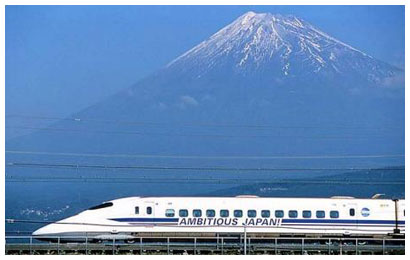
Explosion of debt: Japan's public debt could reach as much as 270pc of GDP in the next two years. A bullet train is pictured speeding past Mount Fuji in Fuji city, west of Tokyo Photo: Reuters
In a report entitled "Worst-case debt scenario", the bank's asset team said state rescue packages over the last year have merely transferred private liabilities onto sagging sovereign shoulders, creating a fresh set of problems.
"As yet, nobody can say with any certainty whether we have in fact escaped the prospect of a global economic collapse," said the 68-page report, headed by asset chief Daniel Fermon. It is an exploration of the dangers, not a forecast.
Under the French bank's "Bear Case" scenario (the gloomiest of three possible outcomes), the dollar would slide further and global equities would retest the March lows. Property prices would tumble again. Oil would fall back to $50 in 2010.
Governments have already shot their fiscal bolts. Even without fresh spending, public debt would explode within two years to 105pc of GDP in the UK, 125pc in the US and the eurozone, and 270pc in Japan. Worldwide state debt would reach $45 trillion, up two-and-a-half times in a decade.
(UK figures look low because debt started from a low base. Mr Ferman said the UK would converge with Europe at 130pc of GDP by 2015 under the bear case).
The underlying debt burden is greater than it was after the Second World War, when nominal levels looked similar. Ageing populations will make it harder to erode debt through growth. "High public debt looks entirely unsustainable in the long run. We have almost reached a point of no return for government debt," it said.
Inflating debt away might be seen by some governments as a lesser of evils.
If so, gold would go "up, and up, and up" as the only safe haven from fiat paper money. Private debt is also crippling. Even if the US savings rate stabilises at 7pc, and all of it is used to pay down debt, it will still take nine years for households to reduce debt/income ratios to the safe levels of the 1980s.
The bank said the current crisis displays "compelling similarities" with Japan during its Lost Decade (or two), with a big difference: Japan was able to stay afloat by exporting into a robust global economy and by letting the yen fall. It is not possible for half the world to pursue this strategy at the same time.
SocGen advises bears to sell the dollar and to "short" cyclical equities such as technology, auto, and travel to avoid being caught in the "inherent deflationary spiral". Emerging markets would not be spared. Paradoxically, they are more leveraged to the US growth than Wall Street itself. Farm commodities would hold up well, led by sugar.
Mr Fermon said junk bonds would lose 31pc of their value in 2010 alone. However, sovereign bonds would "generate turbo-charged returns" mimicking the secular slide in yields seen in Japan as the slump ground on. At one point Japan's 10-year yield dropped to 0.40pc. The Fed would hold down yields by purchasing more bonds. The European Central Bank would do less, for political reasons.
SocGen's case for buying sovereign bonds is controversial. A number of funds doubt whether the Japan scenario will be repeated, not least because Tokyo itself may be on the cusp of a debt compound crisis.
Mr Fermon said his report had electrified clients on both sides of the Atlantic. "Everybody wants to know what the impact will be. A lot of hedge funds and bankers are worried," he said.

The Fourth Turning - Economic and Social Skies Over the United States Darkening


James Quinn
William Strauss and Neil Howe published The Fourth Turning in 1997. This was before the internet bubble, before the housing bubble, before 9/11, before the two wars in the Middle East, and before the financial collapse of 2008. They made a strong case for their generational theory of history. Everything that has happened since 1997 supports their theory. We are currently in the early stages of the Fourth Turning.

In the last two chapters of their book, they describe the possibilities during a Fourth Turning. In the last section of the book they provide guidance on how to prepare responsibly for a Fourth Turning. Without preparation, the Fourth Turning is much worse. Below is a description of Fourth Turning possibilities, the preparations that were recommended by Strauss & Howe, and my assessment of how prepared we are as a country.
"What will America be like as it exits the Fourth Turning?
History offers no guarantees. Obviously, things could go horribly wrong - the possibilities ranging from a nuclear exchange to uncurable plagues, from terrorist anarchy to high tech dictatorship. We should not assume that Providence will always exempt our nation from the irreversible tragedies that have overtaken so many others: not just temporary hardship, but debasement and total ruin. Since Vietnam, many Americans suppose they know what it means to lose a war. Losing in the next Fourth Turning, however, could mean something incomparably worse. It could mean a lasting defeat from which our national innocence - and perhaps even our nation - might never recover.
If America plunges into an era of depression or violence which by then has not lifted, we will likely look back on the 1990s as the decade when we valued all the wrong things and made all the wrong choices."
"However sober we must be about the dark possibilities of Crisis, the record of prior Fourth Turnings gives cause for optimism. With five of the past six Crises. it is hard to imagine more uplifting finales. Even after the Civil War, the American faith in progress returned with a new robustness. As a people, we have always done best when challenged. The New World still stands as a beacon of hope and virtue for the Old, and we have every reason to believe this can contine.
By the middle 2020s, the archetypal constellation will change, as each generation begins entering a new phase of life. If the Crisis ends badly, very old Boomers could be truly despised. Generation X might provide the demagogues, authoritarians, even the tribal warlords who try to pick up the pieces.
History is seasonal, but its outcomes are not foreordained. Much will depend on how tall we stand in the trials to come. But there is more to do than just wait for that time to come. The course of our national and personal destinies will depend in large measure on what we do now, as a society and as individuals, to prepare."
Preparations Needed (1997 - 2006)
In their chapter on preparations for the Fourth Turning, Strauss and Howe essentially tell Americans to grow up. Give up the bad habits that had become part of our life during the Unraveling. We needed to prepare as if a blizzard was headed our way.
"Reflect on what happens when a terrible winter blizzard strikes. You hear the weather warning but probably fail to act on it. The sky darkens. Then the storm hits with full fury, and the air is a howling whiteness. One by one, your links to the machine age break down. Electricity flickers out, cutting off the TV. Batteries fade, cutting off the radio. Phones go dead. Roads become impossible, and cars get stuck. Food supplies dwindle. Day to day vestiges of modern civilization - bank machines, mutual funds, mass retailers, computers, satellites, airplanes, governments - all recede into irrelevance. Picture yourself and your loved ones in the midst of a howling blizzard that lasts several years. Think about what you would need, who could help you, and why your fate might matter to anybody other than yourself. That is how to plan for a saecular winter. Don’t think you can escape the Fourth Turning. History warns that a Crisis will reshape the basic social and economic environment that you now take for granted."
Their suggested preparations as a country and as individuals were:
America’s Recommended Preparations
Prepare values: Forge the consensus and uplift the culture, but don’t expect near-term results.
Prepare institutions: Clear the debris and find out what works, but don’t try to building anything big.
Prepare politics: Define challenges bluntly and stress duties over rights, but don’t attempts reforms that can’t now be accomplished.
Prepare society: Require community teamwork to solve local problems, but don’t try this on a national scale.
Prepare youth: Treat childrenas the nation’s highest priority, but don’t do their work for them.
Prepare elders: Tell future elders they will need to be more self-sufficient, but don’t attempt deep cuts in benefits to current elders.
Prepare the economy: Correct fundamentals, but don’t try to fine tune current performance.
Prepare the defense: Expect the worst and prepare to mobilize, but don’t precommit to any one response.

How America Prepared
No consensus on values was forged. The culture became more decadent and materialistic between 1997 and 2006. Get rich quick became the rallying cry. Institutions became larger and more unwieldy. Federal and state governments doubled in size between 1997 and 2006. They became addicted to tax revenue from the Internet and housing booms. They enacted thousands of new rules, regulations and laws. The debris has not been cleared. The country failed miserably in preparing politics. Blunt truthfulness about our national problems was needed from our leaders. Public purpose and collective duties should have been preached by our leaders. Instead, personal rights and entitlements were promised to every constituent. Corrupt politicians in Washington DC have fed the slide into cynicism, apathy and malaise with their false rhetoric and spineless inability to own up to the truth about the financial obligations that cannot be honored.
Society has not prepared for the Fourth Turning by stressing teamwork, civic duty, and self sacrifice for the betterment of our country. Local communities have not improved schools, housing, or transportation. People have continued to group themselves along party lines. The Millennial generation who will do the heavy lifting during this Fourth Turning have not been raised to understand how important their efforts will be needed in the next 15 years. We have not educated them properly and they have not been made to understand their importance. The elderly have not become more self sufficient. They have become more dependent. More entitlements have been passed for the elderly, making our fiscal picture much worse than it was in 1997. The elderly are prepared to wage a generational war for their goodies.
The preparation of our economy for the Fourth Turning has been a complete and utter disaster. We needed to raise the national savings rate in preparation for the difficult times ahead. Instead it went to 0%. We needed to reduce debt. We doubled it. We needed to balance the budget. The deficits are beyond comprehension. We needed to under consume. We consumed at hyper speed levels. Lastly, we needed to prepare for the inevitable major war that always accompanies a Fourth Turning. We needed to conserve our resources and build up our forces for the coming test. Instead, we wasted trillions of dollars and thousands of lives on worthless wars of choice in the Middle East. Our military is stretched to the breaking point. We are completely unprepared for a new major conflict.
Individual Preparations
Rectify: Return to classic virtues.
Converge: Heed emerging comunity norms.
Bond: Build personal relationships of all kinds.
Gather: Prepare yourself (and your children) for teamwork.
Root: Look to your family for support.
Brace: Gird for the weakening or collapse of public support mechanisms
Hedge: Diversify everything you do.

How Individuals Prepared
Only you would know whether you are prepared for the Fourth Turning. Can you be counted on by your neighbors? Do you have a reputation as a person of honor and integrity? Are you a good citizen? Lone wolves will not fare well during a Fourth Turning. Team, brand and standard will be new catchwords. Appearances will matter. Society will deal justice in a brutal way. You need to know people who can help you. Personal relationships will be crucial. Face to face interaction with neighbors, fellow workers, the public, and the police will determine whether you are a good guy or bad guy.
People who work well in teams will more successfully navigate the Crisis. Children will need to be taught to excel in groups. They are likely to be indoctrinated by the government when danger rises. Your family members will be essential to your survival. Being a loner will not bode well for you during the Fourth Turning. Young and old will likely occupy the same household as other supports will disappear. Government benefits are likely to be dramatically cut. Dependence on authority should not be assumed. You will need to protect your wealth. Healthcare services could be limited. Being physically fit will be important. Being a generalist that can do many things well will make you more valuable during the Crisis. Having less debt will allow you more flexibility. The USD is likely to be devalued, so hedging your bets will be important. If the financial markets crash, will you survive?
As a country, we were completely unprepared for the onset of the current Fourth Turning. We were warned in 1997. We had time to prepare. Instead, we did the exact opposite of what needed to be done. We pressed the accelerator to the floor. Our actions have ensured that this Fourth Turning will be more deadly and brutal than it needed to be. Considering the two previous Fourth Turnings were Depression/WWII and the Civil War, the next 15 years will be grim. As Strauss & Howe point out, this test cannot be avoided:
"Don’t think you can escape the Fourth Turning the way you might today distance yourself from news, national politics, or even taxes you don’t feel like paying. History warns that a Crisis will reshape the basic social and economic environment that you now take for granted. The Fourth Turning necessitates the death and rebirth of the social order. It is the ultimate rite of passage for an entire people, requiring a liminal state of sheer chaos whose nature and duration no one can predict in advance."
The economic news worsens by the day. Worldwide tensions grow. There are fingers of instability throughout the system. All it will take is a grain of sand falling on the wrong part of the pile to initiate an avalanche of pain and suffering. Our Archduke Ferdinand moment awaits.
"Thus might the next Fourth Turning end in apocalypse - or glory. The nation could be ruined, its democracy destroyed, and millions of people scattered or killed. Or America could enter a new golden age, triumphantly applying shared values to improve the human condition. The rhythms of history do not reveal the outcome of the coming Crisis; all they suggest is the timing and dimension.
A Fourth Turning harnesses the seasons of life to bring about a renewal in the seasons of time. In so doing, it provides passage through the great discontinuities of history and closes the full circle of the saeculum. The Fourth Turning is when the Spirit of America reappears, rousing courage and fortitude from the people. History is seasonal, but its outcomes are not foreordained. Much will depend on how tall we stand in the trials to come."
Join me at www.TheBurningPlatform.com to discuss truth and the future of our country.
By James Quinn
quinnadvisors@comcast.net
James Quinn is a senior director of strategic planning for a major university. James has held financial positions with a retailer, homebuilder and university in his 22-year career. Those positions included treasurer, controller, and head of strategic planning. He is married with three boys and is writing these articles because he cares about their future. He earned a BS in accounting from Drexel University and an MBA from Villanova University. He is a certified public accountant and a certified cash manager.
These articles reflect the personal views of James Quinn. They do not necessarily represent the views of his employer, and are not sponsored or endorsed by his employer.
© 2010 Copyright James Quinn - All Rights Reserved
Disclaimer: The above is a matter of opinion provided for general information purposes only and is not intended as investment advice. Information and analysis above are derived from sources and utilising methods believed to be reliable, but we cannot accept responsibility for any losses you may incur as a result of this analysis. Individuals should consult with their personal financial advisors.

"Monetary Shock and Awe": The Fed Prepared to Launch Most Radical Intervention in History


Mike Whitney
(Editor's Note: The following missive leaves the reader with a sense of anticipation, suggesting that there may, still, be a hope for the economy. The problem lies in the dependency on some idea that Bernanke has. Ben Bernanke is a bozo and clueless putz. People that listen to him are, as a result, clueless putzs. The whole body politic is made up of clueless putzs. The Federal Reserve is and always has been (since its inception) the problem. In fact, if we could simply rid ourselves of the parasitic abomination that is the Fed, most all of our other economic problems would solve themselves.You can rest assured that nothing the Federal Reserve will ever come up with could, in any way, shape or form, turn out to be "a solution". Know thine enemy. - JSB)
Bernanke's "Nuclear Option"
The equities markets are in disarray while the bond markets continue to surge. The avalanche of bad news has started to take its toll on investor sentiment. Barry Ritholtz's "The Big Picture" reports that the bears have taken the high-ground and bullishness has dropped to its lowest level since March '09 when the market did a quick about-face and began a year-long rally. Could it happen again? No one knows, but the mood has definitely darkened along with the data. There's no talk of green shoots any more, and even the deficit hawks have gone into hibernation. It feels like the calm before the storm, which is why all eyes were on Jackson Hole this morning where Fed chairman Ben Bernanke delivered his verdict on the state of the economy on Friday.

Wall Street was hoping the Fed would "go big" and promise another hefty dose of quantitative easing to push down long-term interest rates and jolt consumers out of their lethargy. But Bernanke provided few details choosing instead this vague commitment:

"The Committee is prepared to provide additional monetary accommodation through unconventional measures if it proves necessary, especially if the outlook were to deteriorate significantly."
Check. There's no doubt that Helicopter Ben would be in mid-flight right now tossing bundles of $100 bills into the jet-stream like confetti if he had the option. But Bernanke is fighting a rearguard action from inside the FOMC where a fractious group of rebels want to wait and see if the recent downturn is just a blip on the radar or something more serious, another tumble into recessionary hell.

This week, the markets were blindsided by two days of dismal housing news, grim durable goods orders, a slowdown in manufacturing, and modest gains in employment. 4 years later, and housing is still mired in a depression. When does it end? Households and consumers are buried under a mountain of debt; personal bankruptcies, delinquencies, defaults and foreclosures continue to mount while politicians threaten to tighten the purse-strings putting more pressure on families who can barley put food on the table let alone pay the mortgage.

Just months ago, 57 out of 57 economists surveyed predicted that the economy would avoid a double dip recession. Now they're not so sure. Stock market gains have been wiped out and the S&P 500 has dropped 14 percent from its high in April. All of the main economic indicators are testing new lows. The so-called "soft patch" is looking like another hard landing. The fear is palpable. On Thursday, the Dow slipped another 74 points by the end of the session. It could have been worse. The markets have been holding on by their fingernails hoping that Bernanke will bail them out. But it's going to take more than the usual promise of low interest rates for an "extended period" to boost enthusiasm. Wall Street is looking for the "big fix", a trillion dollar resumption of the Fed's bond purchasing program (QE) to pump up flaccid asset prices, electro-shock demand, and raise consumer inflation expectations. The big banks and the brokerage houses want Bernanke to rout the Cassandras and the gloomsters and pump some adrenalin into sluggish indexes. The Fed chairman promised to help.....but not just yet, which is why the markets continue to seesaw.

Bernanke takes the threat of deflation seriously. His earlier speeches laid out a deflation-fighting strategy that is so radical it would shock the public and Wall Street alike. Here's an excerpt from a speech he gave in 2002 which illustrates the Fed boss's willingness to move heaven and earth to fend off the scourge of pernicious deflation:

"My thesis here is that cooperation between the monetary and fiscal authorities in Japan could help solve the problems that each policymaker faces on its own. Consider for example a tax cut for households and businesses that is explicitly coupled with incremental BOJ purchases of government debt - so that the tax cut is in effect financed by money creation. Moreover, assume that the Bank of Japan has made a commitment, by announcing a price-level target, to reflate the economy, so that much or all of the increase in the money stock is viewed as permanent.

Under this plan, the BOJ's balance sheet is protected by the bond conversion program, and the government's concerns about its outstanding stock of debt are mitigated because increases in its debt are purchased by the BOJ rather than sold to the private sector. Moreover, consumers and businesses should be willing to spend rather than save the bulk of their tax cut: They have extra cash on hand, but - because the BOJ purchased government debt in the amount of the tax cut - no current or future debt service burden has been created to imply increased future taxes.

Essentially, monetary and fiscal policies together have increased the nominal wealth of the household sector, which will increase nominal spending and hence prices....from a fiscal perspective, the policy would almost certainly be stabilizing, in the sense of reducing the debt-to-GDP ratio....

Potential roles for monetary-fiscal cooperation are not limited to BOJ support of tax cuts. BOJ purchases of government debt could also support spending programs, to facilitate industrial restructuring, for example. The BOJ's purchases would mitigate the effect of the new spending on the burden of debt and future interest payments perceived by households, which should reduce the offset from decreased consumption. More generally, by replacing interest-bearing debt with money, BOJ purchases of government debt lower current deficits and interest burdens and thus the public's expectations of future tax obligations."
(Some Thoughts on Monetary Policy in Japan, Governor Ben S. Bernanke, The Federal Reserve Board Tokyo, Japan, May 31, 2003)

Yikes! This is monetization writ large. Anyone who thought Bernanke lacked cohones should reread this passage. The Fed chair is prepared to launch the most radical intervention in history, monetary Shock and Awe. But will the bewhiskered professor be able to persuade congress to follow his lead, after all, the fiscal component is critical to the program's success. They're two spokes on the same wheel. Here's how (I imagine) it would work: Congress passes emergency legislation to suspend the payroll tax for two years stuffing hundreds of billions instantly into the pockets of struggling consumers. The Fed makes up the difference by purchasing an equal amount of long-term Treasuries keeping the yields low while the economy resets, employment rises, asset prices balloon, and markets soar. As the economy accelerates, the dollar steadily loses ground triggering a sharp increase in exports and sparking a viscous trade war with foreign trading partners. Then......it's anyone's guess? Either Bernanke's "nuclear option" succeeds in resuscitating the comatose economy or foreign holders of dollars and dollar-backed assets dump their gargantuan trove of US loot in a pile and set it ablaze. It's all a roll of the dice.

UNO "SFORZO GLOBALE" PER IL CONTROLLO DELLA POPOLAZIONE

Le pubblicazioni di John Holdren del 1992, riaffermano l’intenzione di controllare la popolazione attraverso uno “Sforzo Globale”
Di Jurrian Maessen
Ancora un’altra opera è emersa dell’attuale zar della scienza John P.Holdren, dove egli descrive dettagliatamente la sua visione persistente di un pianeta spopolato e lo sforzo a livello globale necessario a realizzarlo. Sebbene gia’ descritto dettagliatamente in Ecoscience e in altre pubblicazioni degli anni 70, quest’ultimo articolo, ancora una volta dimostra, oltre ogni dubbio che la volpe non ha lontanamente abbandonato i suoi trucchi eugenetici.
In una pubblicazione della Cambridge Press del 1992 Energy Efficiency and Human Activity: Past Trends, Future Prospects (Energia Efficenza e Attivita’ Umana: Consuetudini Passate, Prospettive Future), cosponsorizzato dallo Stockholm Environment Institute, John P.Holdren ha scritto un prologo di 52 pagine intitolato ”The Transition to Costlier Energy” (La Transizione Verso Un' Energia piu’ Dispendiosa). In esso, egli ripete la sua visione a lungo accarezzata, di un regime planetario sotto il quale il controllo della popolazione sarebbe condotto in maniera piu’ efficiente.

Rumor PBoC Governor Zhou "John Meriwether" Xiaochuan Has Defected From China After Suffering Half A Trillion In UST-Related Losses


Tyler Durden's picture


Today's stunning if true news comes from Stratfor which has just issued a blast notifying of circulating rumors "in China that People’s Bank of China (PBC) Gov. Zhou Xiaochuan may have left the country." If proven true, this will be the proverbial first rat bailing on the sinking ship. It gets scarier vis-a-vis prospects of US bonds: "The rumors appear to have started following reports on Aug. 28 which cited Ming Pao, a Hong Kong-based news agency, saying that because of an approximately $430 billion loss on U.S. Treasury bonds, the Chinese government may punish some individuals within the PBC, including Zhou." Um, $430 Billion in losses? Hopefully this explains why next month's TIC report won't show any incremental increase in Chinese holdings of Treasuries (and most likely quite the opposite). Stratfor continues: "Although Ming Pao on Aug. 30 published a report on its website indicating that the prior report was fabricated by a mainland news site that had attributed the false information to Ming Pao, rumors of Zhou’s defection have spread around China intensively, and Zhou’s name has been blocked from Internet search engines in China." Even if Zhou is safe and sound in Beijing, the fact that China has experienced nearly half a trillion in losses on its UST holdings is shocking, and means that the US Treasury bubble may be approaching the popping phase.
From Stratfor:
STRATFOR has received no confirmation of the rumor, and reports by state-run Chinese media appeared to send strong indications that Zhou is in no trouble at the moment. However, the release of this rumor and its dispersion throughout the public is significant, particularly as the Communist Party of China (CPC) is preparing for a leadership transition in 2012.

Chinese state-run media and official government websites have run several high-profile reports about Zhou, which should be seen as a move to refute the rumors. The PBC website published two articles on its homepage reporting on Zhou’s meeting with visiting Japanese Financial Services Minister Shozaburo Jimi during the third China-Japan high-level economic dialogue as well as a meeting with an Italian delegation. Xinhua news agency reported that Zhou told the PBC Party Committee Enlargement Meeting on Aug. 30 it should “continue to implement justice, and strengthen legislative work in the financial system.” Prior to this news, Zhou appeared at the 2nd annual conference of the heads of the Chinese, Japanese and Korean central banks held on Aug. 3, and his most recent public appearance was Aug. 10 for China’s Financial System Anti-corruption Construction Exhibition.

Zhou is known to have lofty political ambitions and is believed to be a close ally to former Chinese President Jiang Zemin, as well as a core figure for Jiang’s “Shanghai Gang.” There has been no shortage of rumors about Zhou’s possible dismissal in the past five years, as he is believed to be associated with several high-level financial scandals. For example, Zhou was rumored to be under “shuanggui,” a form of house arrest administered by the CPC, during the massive crackdown of Shanghai Party Secretary Chen Liangyu in 2006, which was perceived in the country as a crackdown of the Shanghai Gang and part of Hu’s effort to consolidate power ahead of the 2007 power transition. There was also a rumor that he might have been detained following the investigation and arrest of Wang Yi, the vice governor of the China Development Bank, along with several other officials in the financial circle. Currently, several financial scandals are still under investigation, and it is likely that Zhou, as PBC governor and one of the most powerful economic players in the country, could be associated with some cases. Therefore, whether or not the rumor is true at this time, the leaking of this news is very likely to be associated with a power struggle within the Communist Party’s economic hierarchy.
We will bring you more as we get it on this potentially groundbreaking development.
Some math:
Assuming average 6 Year duration on holdings (completely arbitrary), and a 2% drop in rates, means $430 billion is 12% of total notional, so somehow China must be short $3.5 trillion in notional or synthetically. Not good.

Few May Imagine What Is Coming ( FOLLETTO )


by Rick Ackerman on August 25, 2010 12:01 am GMT · 66 comments
WP Greet Box icon
Hello there! If you are new here, you might want to get Rick's daily market commentary via email.
[From self-described, “radical ol’ gloom-and-doomer” and frequent Rick’s Picks forum contributor Steven George Fair, here’s a tormented essay on why most of us are too far removed from the experience of the 1930s Depression to have any idea or imagination about what is coming. And make no mistake, he warns: Bears who think their timing and strategy will be good enough to gloat about are the most delusional of us all. RA]
There seems to be a single constant in the financial world, and those who play.  There are few if any perma-anythings, with most chasing the bull, or chasing the bear as a bear-bull in the moment.  It looks like the last of the Perma for Life people are dying off as the last of the generation that endured the Great Depression find their rest in the soil.
The generation who made roads in the dirt, flew paper airplanes, and dreamed the impossible dream are now gray haired, and either broke or millionaires.  There is little ground in between the extremes that was once a maxim 20-60-20 rich/middle class/poor.  What seems to exist today is a younger generation with no imagination, incapable of taking a block of wood and shoving it around the dirt pile in dreams of logging trucks, and crawler tractors.  Lost are the majority who created art, and music in its natural form.  There are no lifelong collectors of anything, only a headlong rush from contemporary to abstract, and back in hyper-realism.  Value is now replaced with greed, and get it now before the color fades.  Bringing a face to this reality was a conversation with a PhD, retired, from NASA, who spoke to me about the fear in NASA that the upcoming generation’s imagination has been lulled to sleep by fast TV, fast girls, and constant bombardment of stimulation instead of self-generated creativity.
A scene from 1932: Could things ever get that bad again?
To a more direct point.  Even the supposed perma-bears of today run helterskelter, seeking profit and gain first in that, and then in this, with no long-living devotion to any belief.  Most current Bears do not care about fundamentals and history.  None seem to care whether or not they are playing in a AntLion hole from which they will never escape.  The greed of gaining the last drop of blood from the dying carcass of both bears and bulls is foremost on the heart of the young and younger.  No person not directly from a Great Depression family is prepared for what will come. That means that unless your parents where born no later than 1920, you cannot have any basis to form an understanding for the potential pain of a real collapse.  There are a few foreigners who understand, but I read nothing of what they may have to say.
‘They Won’t Let It Happen’
It can never happen…Bernanke will not let it happen…the Government is not going to . . .. they will take care of us…I’ll make so much in the crash it will not matter. . .  I’ll be OK.  Please add your own reassurance to the list, as there are many more excuses offered by temp-bearbulls.  The pessimist rarely makes the big killing in the stock market like a tempbull will.  Someone who experienced the Great Depression does not act like today’s tempbull.  There is one great difference between the Great Depression and today where The People are concerned.  Nearly everyone in 1920 knew how to take care of him or herself.  They knew meat came from a cow, and milk did not come from a bottle.  And yet today, the young cannot imagine a milk bottle delivered to the door by the milkman.  Nor have they ever imagined a family coming together to butcher a steer and can the meat because there was no freezer.
I see no imagination in the pages, blogs, and opinions written by financial wizards, or the wizard bulls who are smarter than a non-emotional chartist who knows the pendulum slows, stops, and slowly speeds up to strike down everything past dead center.  There is only one thing that cannot be taken from someone, and that is knowledge.  And even here, I have seen hypothermia take my mind, my strength, and my soul into a black pit of nothingness.  The majority of bulls and bears today have never experienced hypothermia. Nor have the wishy-washy bears seen $1 million on the books that they will never eat, that they cannot turn into warmth or food.
A Rosy Filter
I guess that unless one has seen the valuelessness of gold while you shiver your way into darkness, there just isn’t a perspective to create a reality.  This is why I spoke of imagination and NASA as I wrote.  The generation born into the Sixties has not experienced loss in any form.  That generation is without understanding, or imagination to see through a mental filter created by pain and loss as past generations have.  The 1960s filter of democracy is a rosy filter of much, more, and always more.  Even in the annals of bear-market writers there exists temp-bearbulls looking to ride the next wave for an hour or a day.
Is it time for the Super Depression ? Probably, because the majority who have lived through that kind of pain are all dead and gone.  Will the greedy temp-bearbulls get trampled? Yes ! But not before they see the millions they’ve won by trading correctly fail to provide them with anything of value.  And what of us hard-currency nuts? You tell me!  But Steve, you say: there are so many suffering without jobs today.  True enough. But in 1934, there wasn’t any unemployment in the place where my dad pulled a crosscut saw for $1.00 pre thousand, part-time. (That’s about 50 cents a day, since there was someone on the other end of the saw).  There weren’t any government handouts in Sutherland, where the mill ran one day a week, or one day a month, and where the women rejoiced in their diary: “The men worked today!”  The more bears who think they are going to make a killing on the crash, the nearer we are to that crash.
I think Mr. Market is going to suck the blood out of nearly everyone — but especially from Bears who think Mr. Market is their friend in crushing the Bulls.  Imagine “Value” and imagine what value really is in its most basic sense.  I’d tell you what value is, but you either know, or will not listen to this ol’ radical gloom-and-doomer.